
Categories
Buying a Home, Selling A HomePublished October 28, 2026
New Construction vs. Resale in Alabama: Are Builder Incentives Really a Better Deal?

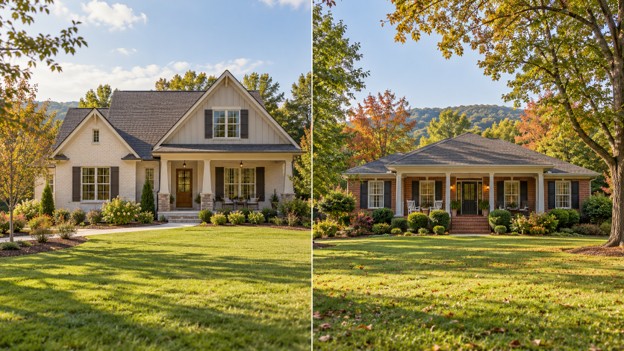
Imagine this Saturday: you tour a new home with a spotless kitchen, a floor plan that makes sense, and a sign advertising an interest rate that gets your attention. Twenty minutes later, you walk through a resale home with a bigger yard, an established neighborhood, and a lower asking price.
You like both. Now you have to figure out which one you can comfortably own.
The new home comes with an incentive. The resale seller might negotiate. One payment quote includes more expenses than the other. And the attractive rate on the sign may describe only the first year.
When you compare new construction vs. resale in Alabama, a builder incentive can make a meaningful difference. The better purchase becomes clearer when you put the homes, financing, and everyday costs on the same page.
The quick answer: A new construction home can be the better deal when its price, financing, cash needed at closing, and long-term payment work together. A resale home can win through a lower purchase price, useful seller concessions, location, or features you would otherwise pay to add. Compare the full payment after any temporary incentive ends, then decide which property fits your life.
Why Alabama buyers should compare both right now
Alabama REALTORS' October 27 housing recap reported 22,525 active listings in September, up 8.5% from a year earlier. Those are statewide September figures released in October; they do not describe every neighborhood or every price range.
Financing remains a major part of the decision. Freddie Mac's weekly survey reported a 7.32% national average for a 30-year fixed mortgage on October 22, 2026. That benchmark is context, not a personal quote or an Alabama-specific rate.
Together, those conditions make it useful to compare actual choices. If a new home offers financing assistance and a nearby resale offers a lower price, neither deserves to be dismissed before you see the numbers.
For the broader timing decision, read Should I Buy a House Now or Wait in Alabama?. Here, the question is narrower: Which available home gives you the strongest overall purchase?
Builder incentives: understand what the offer actually changes
Start by asking the builder to put the offer in writing for the exact property you are considering. Then identify what it does for you.
Closing-cost assistance can reduce eligible expenses you would otherwise pay at closing. Ask which charges it covers, how much you can use with your loan, and what happens to any unused amount.
A temporary mortgage buydown provides payment assistance for a defined period. Ask for the payment schedule, the underlying loan rate, and the amount due when the subsidy ends.
A permanent rate reduction changes the loan's rate for its term when the loan is fixed. Ask about discount points, lender fees, and whether you are giving up another incentive to obtain it.
A price reduction or included improvements changes a different part of the purchase. Verify the final contract price and the specific features included. An allowance is useful only if it pays for something you need on terms you accept.
These benefits solve different problems. Someone with a comfortable monthly budget but limited cash may value closing assistance most. Someone planning to stay for years may care more about the long-term payment. Someone who needs a fenced yard may get more practical value from a resale that already has one.
What a current Alabama offer shows
As reviewed October 28, Davidson Homes' Huntsville-region promotion advertised a 2-1 temporary buydown on select homes. Its FHA example used a 3.75% payment rate in year one, 4.75% in year two, and a 5.75% fixed note rate, with 6.512% APR. Borrowers must qualify at the note rate. The published terms are dated October 15 and depend on eligibility and remaining funds.
The qualifying-home list included Noble Ridge in Cullman. In this offer, the note rate is 5.75% throughout the loan; the builder funds a subsidy that reduces the early payments. Ask the lender to explain the complete schedule, required financing arrangement, and current availability for the home you want.
For another type of incentive, Harris Doyle's financing page advertised up to $7,500 toward closing costs for buyers financing through Silverton Mortgage. “Up to” is the starting point for questions about your actual benefit, eligible costs, and the full loan offer.
New construction vs. resale: compare the same things
Use this table while touring, then replace impressions with written estimates and property-specific information.
|
What to compare |
New construction questions |
Resale questions |
|
Purchase price |
What is the final price with the lot and selected features? |
What price is supported by comparable sales and condition? |
|
Financing |
What are the note rate, APR, fees, and payments after incentives? |
What financing is available, including any requested seller credit? |
|
Cash needed |
What deposit, down payment, closing costs, and move-in purchases are required? |
What cash is needed for closing, immediate repairs, and moving? |
|
Condition |
What independent inspections can be completed, and when? |
What do inspections reveal about condition and upcoming work? |
|
Included features |
Are appliances, blinds, landscaping, and fencing included? |
Which items convey, and which need replacing? |
|
Timing |
Is the home complete, and what does the contract say about delays? |
When can the seller close and deliver possession? |
|
Ongoing expenses |
What are completed-property taxes, insurance, HOA costs, and utilities? |
What are current estimates for those same expenses? |
|
Everyday fit |
Does the location, lot, layout, and neighborhood work for you? |
Does this home meet those same priorities? |
The most useful comparison is between two homes you would actually buy. A model home across the county and a resale outside your preferred commute can produce an interesting spreadsheet without helping you make a decision.
Separate cash to close, principal and interest, and total payment
These three numbers answer different questions.
Cash to close tells you what you need to bring to closing after the deposit, credits, and other adjustments are accounted for. Also budget separately for moving and anything the home needs immediately.
Principal and interest, or P&I, covers the loan repayment itself. An advertised P&I payment leaves other ownership expenses to be added.
Your full monthly housing budget should account for applicable taxes, homeowners insurance, mortgage insurance, HOA charges, and other ownership expenses. Utilities and a maintenance reserve belong in your household budget even when they are not collected with the mortgage payment.
The Consumer Financial Protection Bureau's Loan Estimate comparison guide recommends reviewing loan amount, rate, payment, lender costs, credits, and cash to close. It also explains that a lower estimate for taxes or insurance does not, by itself, make one lender's offer better.
Ask both lenders to use consistent assumptions and explain differences. Compare quotes obtained close together, then look beyond the promotional year. Review the note rate alongside the APR, which includes certain financing costs; the CFPB explains why APR and interest rate measure different things.
My practical test: would you still choose this home if the full payment started next month? If the answer depends on a future raise or an assumed refinance, revisit the budget before the property becomes an emotional commitment.

Compare the written terms for both homes before choosing. AI-generated editorial image.
Run one comparison that survives the first year
Take your favorite new home and your favorite resale. Ask for a written comparison showing these five items:
1. Final purchase price and financed amount. Include selected upgrades and any financed loan charges.
2. Cash needed through move-in. Include the down payment, closing expenses, deposit credits, moving, and necessary purchases.
3. Payment during each stage. Show year one, year two, and the payment after temporary assistance ends.
4. Expected work and recurring expenses. Use inspection findings, actual insurance quotes, HOA documents, and realistic estimates.
5. Your likely ownership period. Compare the costs over the years you reasonably expect to stay, including the remaining loan balance.
Consider this hypothetical comparison, using 20% down and 30-year fixed loans with no financed fees. These are illustrative rates, not loan offers or the Davidson FHA promotion described above.
|
Item |
Resale example |
New construction example |
|
Purchase price |
$300,000 |
$320,000 |
|
Down payment |
$60,000 |
$64,000 |
|
Loan amount |
$240,000 |
$256,000 |
|
Fixed interest rate |
7.25% |
5.75% |
|
Monthly principal and interest |
$1,637.22 |
$1,493.95 |
The new home costs $20,000 more and requires $4,000 more down, yet its P&I payment is about $143 lower. That is the effect of the assumed financing. A lower rate could apply to either property type.
These payments exclude taxes, homeowners insurance, HOA charges, and mortgage insurance; closing costs are also excluded. Add the actual expenses before deciding. Then compare costs over your likely ownership period and the loan balances you would still owe. If a lower payment comes with higher upfront fees, calculate how long the monthly savings would take to recover those fees.
Five questions that can change the apparent bargain
1. Are the property-tax estimates based on the completed home?
Ask the lender and appropriate local tax office how the estimate was prepared. Does it reflect the completed property, and what assumptions were made about exemptions? For a resale, ask whether the seller's tax bill reflects circumstances that will differ from yours.
A comparison becomes less useful when one side uses a realistic ownership estimate and the other uses an unexplained number.
2. What will insurance and HOA obligations actually cost?
Get an insurance quote for each address. Ask about relevant coverage, deductibles, and any additional policy needs. Review the HOA documents for dues, transfer charges, restrictions, and planned obligations. If a community amenity influenced your decision, ask about its status and the written commitments that apply.
3. What do I need to buy or fix immediately?
Walk the new home with a list: refrigerator, washer and dryer, window coverings, fencing, gutters, landscaping, and storage. Which are included? Which are optional? Which can wait?
For a resale, turn inspection findings into a prioritized budget. Separate urgent work from cosmetic preferences. A dated cabinet color and an unresolved roof concern deserve different treatment.
4. What inspections and warranty terms will I receive?
For new construction, ask when an independent inspector can visit, how findings will be addressed, and what the written warranty covers, excludes, and requires. Ask who handles claims and how to document a concern. The FTC's new-home warranty guidance explains that coverage is limited and can vary by component.
An independent home inspection evaluates condition; an appraisal serves a different purpose. For a resale, ask specific condition questions and choose inspections appropriate to the property. Our guide to Alabama's disclosure rules for resale homes explains why buyers should take the contract, written questions, and due diligence seriously.
5. What happens if the closing date changes?
Ask how a delay affects your rate lock, incentive, deposit, housing arrangements, and moving costs. For a resale, confirm possession timing and any proposed occupancy after closing. For an unfinished new home, understand which dates are estimates and which obligations are written into the agreement.
Bring the decision back to your Alabama neighborhood
Use the same method whether you are comparing homes around Huntsville and Madison, along the Cullman and Hartselle corridor, or in Birmingham-area communities such as Gardendale, Trussville, and Hoover.
The questions should become more specific as the search narrows. What is the drive at the time you actually leave for work? How usable is the lot? Where will you put your tools, boat, or extra vehicle? Are the features you liked during the tour present in the home you are purchasing?
If your search includes Jasper, Walker County, or Smith Lake, apply the same discipline to the property features that matter to you. Ask about access, utilities, maintenance, restrictions, and any waterfront features before assigning them value in your comparison.
Spend a weekday in the neighborhood as well as a Saturday. Picture groceries, laundry, parking, working from home, and the outdoor space you will use. A favorable loan cannot improve a layout that frustrates you every morning.
If your alternative is buying a lot and arranging your own build, assemble a separate site and construction budget. Our Alabama land-buying due-diligence guide covers access, utilities, septic, and property restrictions to investigate before treating a parcel as a future homesite.
Selling a home while you buy changes the calculation
If you need proceeds from your current home, the purchase incentive is only one part of the move. Start with available cash, a realistic selling timeline, and pre-approval or proof of funds. Have the lender explain what remains subject to final approval.
Ask whether the builder will accept a home-sale contingency and what happens if your sale takes longer. Compare that with the flexibility available from the resale seller. Temporary housing, storage, and overlapping payments belong in the budget if either path may require them.
Our guide to buying a home before selling your current one in Alabama walks through that sequencing decision.
If you are the resale seller, look closely at what buyers can purchase nearby, including new homes with incentives. Your price, condition, included features, and possible concessions should tell a coherent value story. For an existing listing, Why Is My Home Not Selling? helps connect buyer response with the next action to take.
Frequently asked questions
Is new construction cheaper than buying an existing home in Alabama?
It depends on the actual homes and financing. Compare final price, closing cash, full monthly costs, immediate work, and included features. An incentive can improve a new home's value without making it the least expensive choice.
Is a builder's advertised low rate permanent?
Read the terms. Ask whether it is the fixed note rate, a temporary payment rate, or an adjustable rate. Request the payment schedule and the lender's written explanation before using the headline percentage in your budget.
Can I negotiate with a builder?
You can ask about price, closing assistance, financing, upgrades, and timing. Get the response for the specific home in writing. Compare any alternatives offered; a larger advertised incentive may involve a different price or loan arrangement.
Should I compare the builder's lender with another lender?
Yes. Ask for comparable written offers and account for any incentive tied to a particular lender. Review the overall loan and purchase package, including fees, payment, and cash needed, before choosing.
Do I need an inspection on a new construction home?
I recommend planning independent inspections and confirming access and deadlines before signing. Ask what the inspection will cover, how concerns will be resolved, and how that process relates to the builder's walkthrough and warranty.
Should I wait for mortgage rates to fall before deciding?
Base the purchase on financing you can obtain and comfortably afford now. You can compare a waiting scenario, but treat future rates, prices, and refinancing as uncertain. The home should make sense without a promised change.
Let's compare the homes you are actually considering
Send me the new construction home and the resale that have your attention. Tell me your comfortable payment range, move timeline, and the three features you do not want to compromise on.
The Humphries Group can help you evaluate the properties, request clear incentive terms, and work with your lender on a meaningful comparison. You should be able to explain why a purchase works before you sign for it.
Call or text us at (205) 202-0082, or start with our Alabama homebuying page.
Sources and offer dates
· Alabama REALTORS: Q3 housing recap, published October 27, 2026; September market figures.
· Freddie Mac Primary Mortgage Market Survey, October 22, 2026 national benchmark.
· Davidson Homes Huntsville-region promotion and Harris Doyle financing, reviewed October 28, 2026. Confirm current eligibility, property availability, and written terms directly before relying on an offer.
· Consumer Financial Protection Bureau: Comparing Loan Estimates, APR and interest rates, and independent inspections.
· Federal Trade Commission: Warranties for New Homes.

Justin Humphries
Team Leader | Keller Williams | The Humphries Group | Alabama Real Estate
or another way